Mortgage Process in Raleigh: The mortgage process in Raleigh isn’t just about getting approved — it’s about making sure your loan is built to close in real-world conditions. In Raleigh, Wake County, and the Triangle of North Carolina, buyers who succeed understand that execution, documentation, and local expertise matter just as much as interest rate. This guide from Martini Mortgage Group explains how the mortgage process really works, where deals fall apart, and how to prepare with clarity and confidence before going under contract.
Is It a Good Time to Buy a House in Raleigh?
Executive Summary: Is It a Good Time to Buy a House in Raleigh?
Is it a good time to buy a house in Raleigh is not a market-timing question; it’s a personal decision shaped by affordability, timeline, and how today’s local conditions affect risk over time.
Raleigh is no longer a frenetic market, but it is not a distressed one either. That shift gives prepared buyers more negotiation leverage and clearer decision-making than in recent years. Mortgage rates remain higher than pandemic lows, but payment comfort and flexibility matter far more than predicting where rates may move next. Home prices in Raleigh have shown resilience, meaning waiting does not automatically translate into better value.
For homebuyers with stable income, a multi-year horizon, and a clear strategy, today’s Raleigh market can support confident, well-structured purchases. For others, waiting may be appropriate — but only when paired with a deliberate plan, not hope.
Prepared by Martini Mortgage Group, Raleigh-based mortgage advisors specializing in fiduciary-style homebuying strategy and long-term planning.
Is It a Good Time to Buy a House in Raleigh?
How smart Raleigh buyers are deciding in 2026 — without guessing, rushing, or waiting forever.
Why This Question Keeps Coming Up in Raleigh
If you’re asking whether it’s a good time to buy a house in Raleigh, you’re not alone, and you’re not late.
This question usually shows up when three things collide:
- Raleigh mortgage rates feel meaningfully higher than they were a few years ago
- Home prices didn’t fall the way many headlines predicted
- Renting feels increasingly expensive, yet buying still feels like a big step
What most people are really asking isn’t, “Is the market perfect?”
They’re asking:
“If I buy now, will I regret it later?”
That’s the question worth answering.\
“Good Time to Buy” Is the Wrong Question
There is no universal answer to whether it’s a good time to buy in Raleigh, because markets don’t buy houses. People do.
A better question is:
Does buying now reduce or increase my personal risk over time?
In Raleigh, that answer depends far more on your timeline, comfort with payments, and strategy than on whether prices or mortgage rates move slightly up or down next year.
What’s Actually Changing in Raleigh (Without the Noise)
Raleigh is no longer a frenetic market, nor is it distressed.
What we’re seeing instead is something quieter and more important: a normalization of leverage.
That shows up as:
- Homes are taking longer to sell than they did at the peak
- Raleigh buyers regaining room to negotiate price, terms, and concessions
- Fewer emotional bidding wars and more deliberate decisions
This kind of market doesn’t reward speed for speed’s sake.
It rewards prepared buyers who understand their numbers.
The Three Risks Buyers Are Weighing Right Now
Most Raleigh buyers are balancing the same three concerns, whether they say them out loud or not.
1. Rate Risk
Raleigh mortgage rates may drift lower over time, but no one knows when or by how much. Waiting for the “perfect” rate often means sitting on the sidelines longer than planned.
The real question isn’t where rates go; it’s whether today’s payment works comfortably for your life.
2. Price Risk
Home prices in Raleigh are not behaving like boom-or-bust markets. That means waiting doesn’t automatically translate into better pricing, especially if buyer demand returns when rates ease.
3. Regret Risk
This is the quiet one.
Not regret from buying — but regret from waiting too long while rent keeps rising and options narrow.
What Waiting Really Means in Raleigh
Waiting can be the right move if it’s intentional.
But many Raleigh homebuyers underestimate what waiting actually costs:
- Another year of rent with no equity
- Continued exposure to rent increases
- Fewer negotiating opportunities if buyer demand returns
In Raleigh, the opportunity cost of waiting is often subtle, not dramatic — which is why it’s easy to overlook.
A Raleigh-Specific Decision Framework
Instead of guessing, here’s a clearer way to think about buying in Raleigh:
Ask yourself:
- Can I afford today’s payment without stretching my lifestyle?
- Do I plan to stay long enough for time to smooth out short-term market noise?
- Am I buying shelter, stability, or a short-term win?
- If rates drop later, do I have flexibility — or am I assuming one outcome?
When those answers are clear, market timing becomes far less intimidating.
When Buying Doesn’t Make Sense (And That’s Okay)
Buying in Raleigh may not be the right move if:
- Your income is uncertain or changing
- Your plans are short-term or unclear
- The payment would create stress instead of stability
Waiting is not failure; however, waiting without a plan is.
So… Is It a Good Time to Buy a House in Raleigh?
For the right buyer, yes — not because the market is perfect, but because:
- Conditions are more balanced
- Negotiation power has returned
- Preparation matters more than prediction
For others, the right move may be to wait — strategically, not hopefully.
The goal isn’t to beat the market.
It’s to make a decision you won’t second-guess.
TL;DR — Is It a Good Time to Buy a House in Raleigh?
There is no universal “right time” to buy a house in Raleigh.
But there is a right decision framework.
If you have stable income, a realistic timeline, and a payment that fits your life, today’s more balanced Raleigh market can offer negotiation leverage and clarity that didn’t exist in recent years. If those pieces aren’t in place, waiting may be the smarter move — but only when it’s intentional and paired with a plan.
The real risk isn’t buying at the wrong moment.
It’s waiting without understanding what waiting is actually costing you.
Want Clarity Without Pressure?
This is exactly why we built a Raleigh-specific rent vs. buy breakeven analysis that goes deeper than a generic online calculator.
Not to push you toward buying. But to help you understand when buying actually improves your life — and when it doesn’t.
In a complimentary, confidential clarity call with Kevin Martini or Logan Martini, you’ll get:
- A clear picture of your numbers
- A realistic breakeven range — not a guess
- Confidence around timing
- And a plan that aligns with your life, not headlines
No pressure.
No commitment.
Just clarity.
If you’re ready to replace uncertainty with confidence, we’re here to help.
Is It a Good Time to Buy a House in Raleigh? Common Questions Answered
Is it a good time to buy a house in Raleigh right now?
It may be a good time to buy a house in Raleigh if you have a stable income, a realistic timeline, and a comfortable payment that fits your budget. Raleigh’s market is more balanced than in recent years, giving prepared buyers more negotiation leverage and clarity than during the frenzy years.
Should I wait to buy a house in Raleigh until mortgage rates go down?
Waiting for lower mortgage rates can make sense in some cases, but it also carries risk. Rates are unpredictable, and waiting often means higher rents, rising home prices, or increased competition if rates fall and buyer demand returns.
Are home prices expected to drop in Raleigh?
Most data suggests Raleigh home prices are stabilizing rather than declining sharply. Because Raleigh has strong long-term demand drivers, waiting does not automatically lead to better pricing, especially in desirable neighborhoods.
Is Raleigh a buyer’s market or seller’s market right now?
Raleigh is currently closer to a balanced market than a true buyer’s or seller’s market. Homes are taking longer to sell, and buyers have more room to negotiate price and terms, but quality homes still attract interest.
How do I know if buying makes more sense than renting in Raleigh?
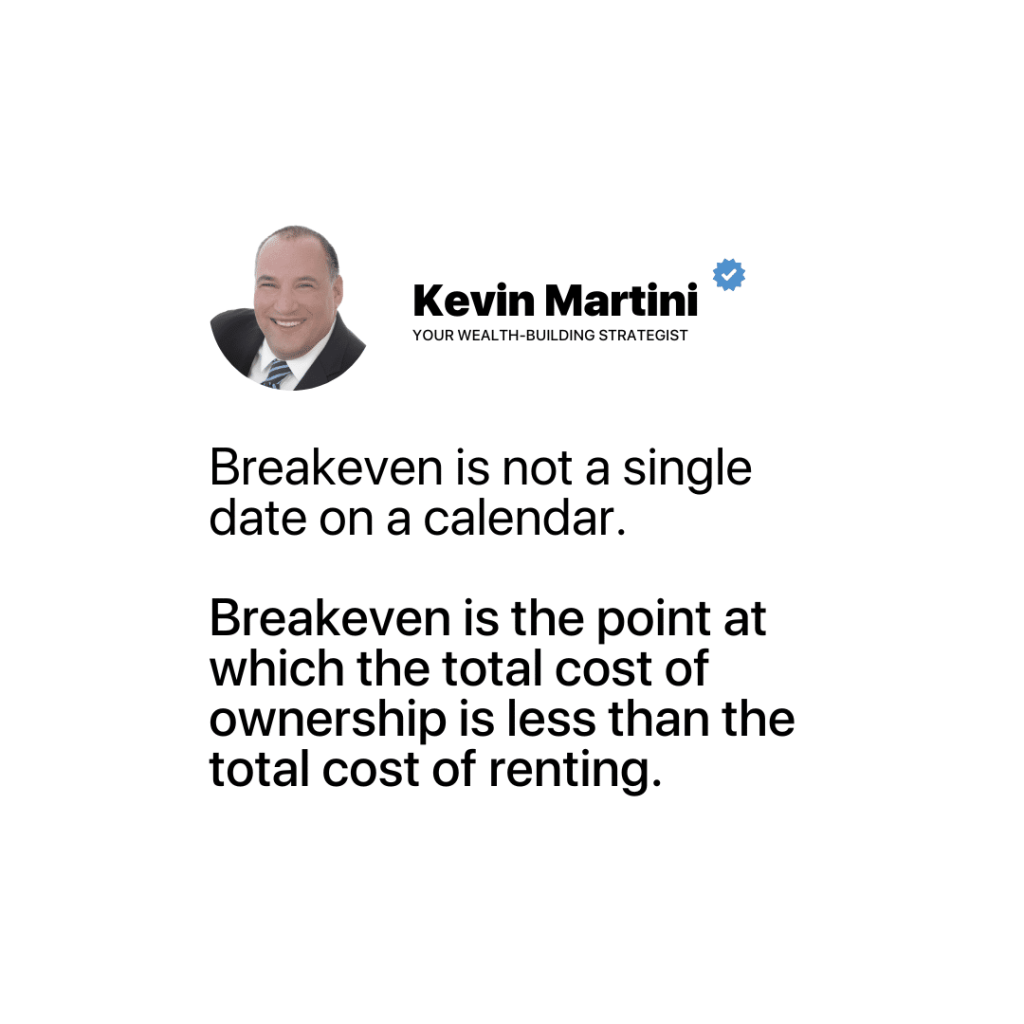
Buying makes more sense than renting when the long-term cost of ownership, after accounting for equity built, is lower than the ongoing cost of rent with no equity. This depends on your rent, purchase price, financing strategy, and how long you plan to stay.
How long do I need to stay in a Raleigh home for buying to make sense?
There is no universal timeline like “five to seven years.” Breakeven varies based on price, rent growth, interest rate, negotiation, and life plans, which is why Raleigh-specific analysis matters more than generic rules.
Are Raleigh mortgage rates still high compared to normal?
Raleigh mortgage rates are higher than the unusually low pandemic-era rates, but they are closer to historical norms. What matters more than the rate itself is whether the monthly payment fits comfortably within your financial life.
Does waiting reduce my financial risk as a buyer?
Waiting can reduce risk if it improves your financial stability or clarity, but it can also increase risk through rising rents, higher future prices, and lost equity. Waiting is most effective when paired with a clear plan rather than uncertainty.
What matters more: timing the market or being prepared?
Preparation matters more than timing. Buyers who understand their numbers, timeline, and options tend to make better decisions than those trying to predict short-term market movements.
Additional Raleigh Homebuying Resources

Related Posts