Mortgage Process in Raleigh: The mortgage process in Raleigh isn’t just about getting approved — it’s about making sure your loan is built to close in real-world conditions. In Raleigh, Wake County, and the Triangle of North Carolina, buyers who succeed understand that execution, documentation, and local expertise matter just as much as interest rate. This guide from Martini Mortgage Group explains how the mortgage process really works, where deals fall apart, and how to prepare with clarity and confidence before going under contract.
FHA Loan After Bankruptcy in North Carolina: How to Qualify
Bankruptcy feels final.
Like a door quietly closed behind you.
But here’s the truth most North Carolina and Raleigh homebuyers never hear:
An FHA Loan after bankruptcy in North Carolina is not only possible — it’s often the fastest, most forgiving path back to homeownership.
The problem isn’t eligibility.
It’s misinformation.
Outdated advice.
One-size-fits-all rules.
And lenders who won’t slow down long enough to explain your real options.
If you’re in Raleigh or anywhere in North Carolina and wondering, “Can I buy a home again?” — this article is your roadmap.
Clear. Honest. Strategic.
No pressure.
No fluff.
Just the facts you actually need.
What Is an FHA Loan After Bankruptcy in North Carolina and Why It Matters
An FHA loan after bankruptcy in North Carolina is a Federal Housing Administration–insured mortgage used to purchase a home after filing Chapter 7 or Chapter 13 bankruptcy.
FHA guidelines are more flexible than conventional loans. That matters in North Carolina right now.
Why?
- Wake County home prices continue to rise steadily
- Inventory has improved, but affordability still matters
- FHA loans allow lower down payments and higher debt flexibility
For buyers rebuilding after bankruptcy, FHA isn’t a shortcut. It’s a structured re-entry into responsible homeownership.
Benefits of an FHA Loan After Bankruptcy for Raleigh Homebuyers
Here’s the simple version:
Chapter 7 Bankruptcy
- FHA requires a 2-year waiting period from discharge
- Credit must be re-established
- Stable income and payment history matter more than score alone
Chapter 13 Bankruptcy
- You may qualify after 12 months of on-time payments
- Court approval is required
- You do not have to wait until discharge in many cases
This is where strategy matters. Two buyers with the same bankruptcy can have very different outcomes depending on how they rebuilt afterward.
Common Misconceptions About FHA Loans After Bankruptcy
- “I need perfect credit again.”
- “I have to wait seven years.”
- “All lenders follow the same rules.”
- “Bankruptcy automatically disqualifies me.”
- “I should wait until rates drop.”
None of these are universally true.
The real rule is this: context beats assumptions.
When an FHA Loan After Bankruptcy Makes Sense and When It Doesn’t
It makes sense when:
- Your income is stable
- You’ve rebuilt payment habits
- You want a structured, conservative path forward
It may not make sense when:
- Your income is variable without documentation
- You plan to move short-term
- You qualify for better options with time
Honest guidance matters here.
How the Martini Mortgage Group Helps
Our approach is strategy-first, guided by a high-trust advisory style.
That means we don’t start with loan products. We start with clarity.
We focus on:
- Education before execution
You understand the rules and tradeoffs before making a move. - Clarity before commitment
No pressure. No rushing. Just informed decisions. - Same-As-Cash Mortgage Approval
So you can shop confidently in Raleigh, Wake County, and every county in North Carolina. - The Martini Mortgage Group’s proprietary No-Down-Payment FHA strategy
For qualified buyers, we can structure FHA financing in a way that eliminates the traditional out-of-pocket down payment — a powerful option for buyers rebuilding after bankruptcy who have income but limited liquidity. - North Carolina-specific underwriting insight
Local pricing, appraisals, and inventory are built into the plan from the start. - One-on-one clarity calls
Confidential. Complimentary. Zero pressure.
We don’t just help you qualify. We help you move forward with confidence, knowing your options, timing, and next step are aligned with your life — not just a loan guideline.
FAQs: FHA Loan After Bankruptcy in North Carolina (Expert Answers from Certified Mortgage Advisor Kevin Martini)
What actually determines whether I qualify for an FHA loan after bankruptcy in North Carolina?
Qualification isn’t based on bankruptcy alone.
What changed after the bankruptcy — income stability, payment behavior, and how credit was responsibly rebuilt. In North Carolina, borrowers who demonstrate 12–24 months of consistent on-time payments and steady income often qualify with Martini Mortgage Group, even if their credit score is still recovering.
Is the FHA waiting period after bankruptcy a hard rule, or are there exceptions?
The FHA waiting period after bankruptcy is generally a hard eligibility requirement, with limited flexibility for documented extenuating circumstances.
For most borrowers:
Chapter 7: FHA requires a minimum two-year waiting period from the discharge date
Chapter 13: FHA allows eligibility after 12 months of on-time plan payments, with court or trustee approval
However, FHA guidelines allow shorter waiting periods in rare cases involving extenuating circumstances — such as a serious medical event, death of a wage earner, or other one-time events beyond the borrower’s control.
To qualify under an extenuating circumstance:
*The event must be documented
*It must be unlikely to recur
*The borrower must show full recovery and re-established financial stability
Even in these cases, approval is not automatic. The waiting period may be reduced, but the file is reviewed more carefully, and the burden of proof is higher.
In short, the timeline is fixed for most buyers — but documented, legitimate hardship can change the outcome in specific situations.
Why do some Raleigh buyers qualify sooner than others after bankruptcy?
Local market context matters.
In Raleigh and Wake County, lenders often see strong employment stability and predictable income, which can offset risk faster. Buyers who maintained housing payments, avoided new late payments, and documented their recovery clearly tend to move through underwriting more smoothly.
Can I realistically buy a home with little or no money saved after bankruptcy?
Yes, in some cases.
While FHA typically requires a modest down payment, certain strategies — including the Martini Mortgage Group’s proprietary No-Down-Payment FHA approach for qualified buyers — can reduce or eliminate the traditional upfront cash requirement without increasing long-term risk. This is especially helpful for buyers who prioritize rebuilding stability over saving large lump sums.
What mistakes delay FHA approval after bankruptcy more than anything else?
The most common delays come from:
*Opening new accounts too aggressively
*Missing even one payment after bankruptcy
*Waiting too long to get guidance
*Assuming all lenders interpret FHA rules the same
The biggest mistake is waiting in silence instead of planning early.
Should I apply for an FHA loan as soon as I’m eligible, or wait longer?
That depends on strategy, not fear.
Some buyers benefit from waiting a few extra months to improve terms. Others are better served by buying sooner to stabilize housing costs. The right answer depends on income trajectory, market conditions in North Carolina market you want to call home, and how long you plan to stay in the home.
How does buying with an FHA loan after bankruptcy affect my long-term financial picture?
Used correctly, FHA can be a re-entry tool, not a permanent solution.
Many North Carolina buyers use FHA to re-establish ownership, build equity, and later refinance into conventional financing once their profile strengthens. The key is entering with a plan — not just getting approved.
Additional FHA Loan Resources
FHA Loans in Raleigh
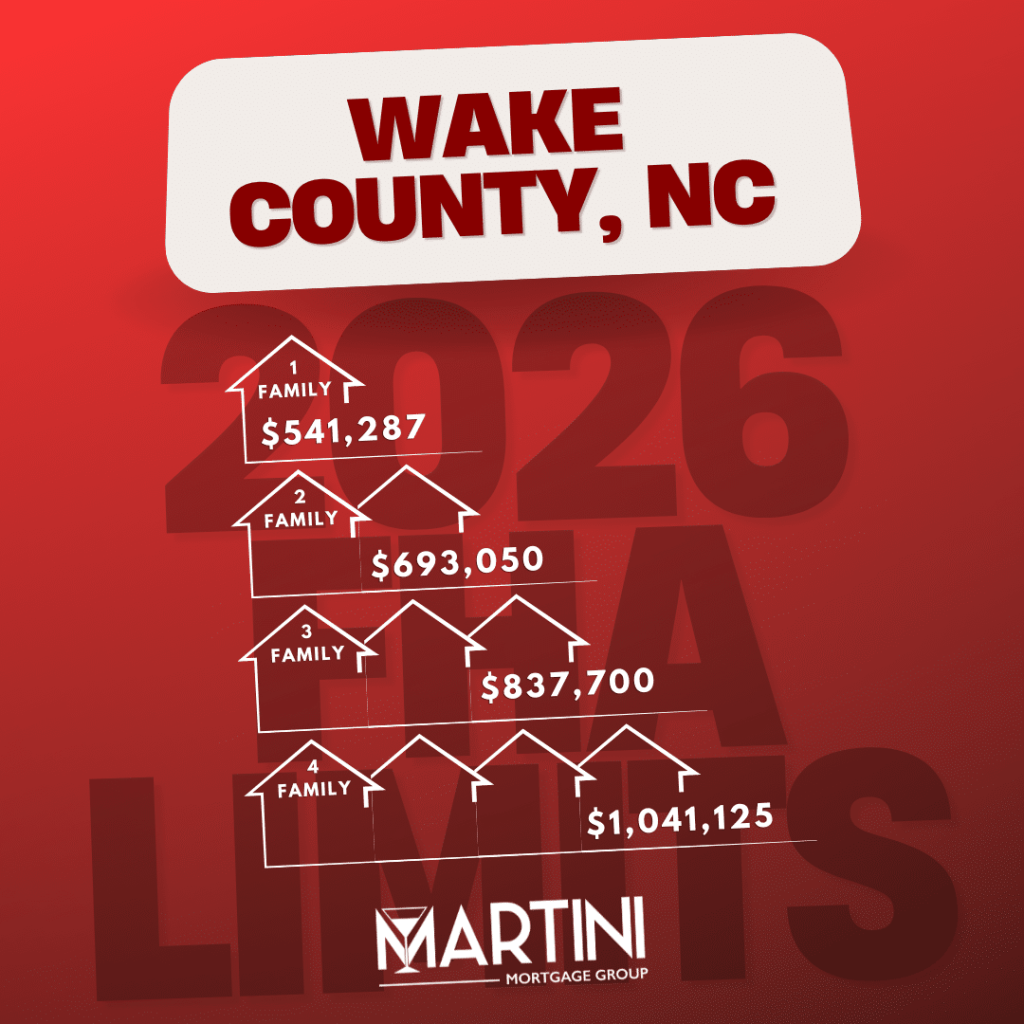
2026 FHA Loan Limits in Wake County, North Carolina
North Carolina Mortgage Guide
Dreams to Doorsteps: A Raleigh Homebuyer Guide

Kevin Martini
Logan Martini

Related Posts