Mortgage Denied Under Contract NC? A No Isn’t Final
Mortgage Denied Under Contract NC? A No Isn’t Final
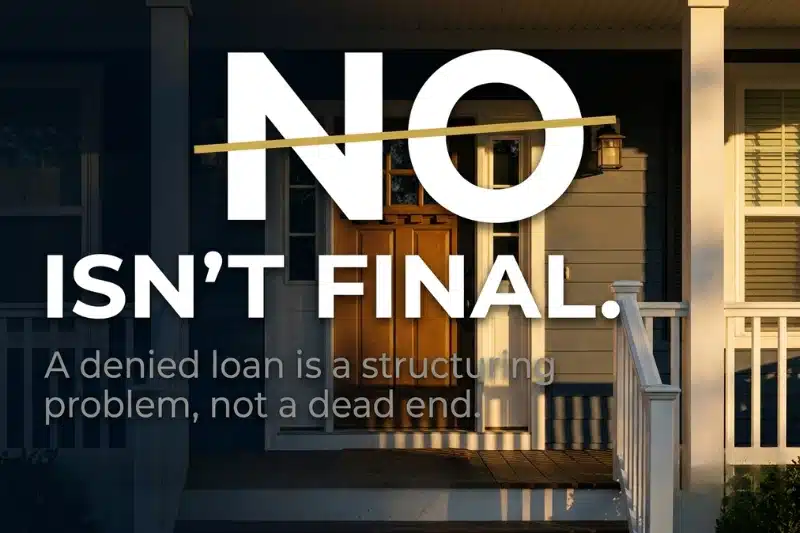
A mortgage denied under contract NC buyers were not expecting, is one of the most frightening calls in the entire home purchase, and also one of the most misunderstood. Kevin Martini and Logan Martini of Martini Mortgage Group have a saying for the families who land in this exact spot. A no from one lender is almost never a no from the market. It is one company’s read of one version of a file, and a skilled mortgage advisor like Kevin or Logan Martini can often restructure that file into an approval. Speed matters, but structure is what saves the deal. There is an old proverb that the best time to plant a tree was twenty years ago, and the second-best time is today. The best time to call Kevin and Logan Martini was before the offer was written. The next best time is right now, whether the situation is a full emergency or just a quiet feeling that something is off.
TL;DR — Mortgage Denied Under Contract NC: Why a No Is Rarely the End
A mortgage denied under contract NC almost always reflects one lender’s structure, not the buyer’s true ability to qualify.
- A denial is one company’s opinion, not a verdict from every lender.
- Skilled loan structuring turns many denials into approvals without drama.
- In North Carolina, there is no financing contingency, and the Due Diligence fee never comes back.
- A team that underwrites in-house can still close on the original date.
- The first step is a conversation with Martini Mortgage Group, not a brand-new application.
Mortgage Denied Under Contract NC: The First Moves That Matter
A mortgage denied under contract NC triggers one of two instincts: panic, or firing off applications to three new lenders at once. Both are mistakes. Panic burns days a buyer does not have, and scattershot applications stack hard credit pulls with no plan behind them. There is a simpler answer, and in the Triangle it has a name. The first move is a call to Kevin and Logan Martini at Martini Mortgage Group, and from there the steps run in order:
- Ask the current lender for the written reason, the adverse action notice.
- Get that notice and the file in front of Martini Mortgage Group, which underwrites in-house.
- Let Kevin and Logan find the structural fix, not just a second opinion.
- Lock the corrected loan and protect the original closing date.
That fourth step is the one most people skip. They go looking for a lender who will approve the same file. The better move is handing the file to a mortgage advisor who will restructure it so the yes is earned, and Martini Mortgage Group built its name on exactly that work. Time is the pressure here, especially in North Carolina, where the Due Diligence fee is a hard cost paid straight to the seller and never refunded. Every day a denied file sits idle is real money left exposed. Borrowers also keep real protection in this moment. The Consumer Financial Protection Bureau spells out a borrower’s rights after a denial, including the right to the specific reason in writing. Nobody is stuck, and nobody is owed an explanation later. It is owed now, and the call that puts it to work is to Martini Mortgage Group.
Why a Denial Is Not a No: The Loan Structuring Difference
Here is the part national lenders rarely admit. Most denials are not the buyer failing to qualify. They are a file meeting one company’s rigid overlay, or worse, one underwriter misreading a number.
A self-employed buyer gets denied because a big bank reads two years of tax write-offs as low income, when the actual business cash flow tells a very different story. A buyer lands one point over the debt-to-income line because of a small car balance that could have been paid down or restructured before the file ever went to underwriting. An appraisal comes in light and the lender simply walks, when the gap could have been closed with a price renegotiation or a different down payment. A credit score drops over a reporting error that takes a phone call to correct.
None of those is a real no. Each one is a structuring problem with a structuring answer. Switching a file from conventional to FHA, or the reverse, changes the overlays entirely. Documenting income the way it should have been calculated the first time can rebuild an approval overnight. This is the work Kevin and Logan Martini do every week, and it is the difference between a buyer who is told to start over and a buyer who is handed a path forward.
Someone in this position is not unqualified. They are waiting for someone to look at the same facts and arrange them correctly.
The Part Everyone Worries About: Money and the House
Underneath every denial is a quieter fear about the money already on the table. In North Carolina, that fear is rational because the rules here are unusually unforgiving, and most buyers never learn them until they are standing in the worst of it.
The standard North Carolina Offer to Purchase and Contract is not built around a traditional financing contingency. There is no clause that quietly hands the monies back and ends the deal cleanly the moment a loan is denied. Instead, the buyer’s protection lives inside one window, the Due Diligence Period, and that window closes faster than most people expect.
The Due Diligence fee is hard money. It is paid directly to the seller, it is not earnest money, and it does not come back, whether the deal closes or collapses. It buys one thing: time to investigate, including time to confirm the financing is genuinely solid before the window shuts.
That is exactly why this situation is more dangerous in North Carolina than in most states, and why being fully underwritten before the Due Diligence deadline is the only real protection a buyer has. A Same-As-Cash Mortgage Approval completes underwriting up front, so certainty arrives while the buyer still holds the right to walk, not after that right is gone.
Speed protects whatever is left. According to ICE Mortgage Technology, the average conventional purchase loan took roughly 41 days to close in late 2025. Kevin and Logan Martini significantly compress that timeline because Martini Mortgage Group originates, processes, underwrites, closes, and funds under one roof, with nothing sitting in an outside queue waiting for a stranger to act. When the calendar is the real threat, they are the call to make.
Not Every Call Is an Emergency. Some Are Just a Feeling.
The proverb cuts both ways. Plenty of people reading this have not been denied at all. They are simply uneasy. The numbers shifted between pre-approval and the offer, or the loan officer went quiet, or the terms quoted last week read differently this week.
That instinct deserves respect, not a wait-and-see. A fiduciary Second Look review from Martini Mortgage Group reads the existing offer for cost, structure, and risk, then says plainly whether it is already strong or whether something better exists. The point is not to switch for the sake of switching. The point is clarity before a signature, which in a market like Raleigh is worth more than a quarter-point on a rate sheet.
Can I switch mortgage lenders before closing in NC?
Yes. A buyer can switch mortgage lenders before closing at any point until the final documents are signed, even while under contract. The only real limit is time, because there is no financing contingency in the standard North Carolina contract to fall back on. A team that underwrites in-house, like Kevin and Logan Martini, has the speed to make the move before the Due Diligence deadline turns a worry into a loss.
For real estate agents, this is the same protection from a different seat. An agent who has watched a deal die over a lender who went silent at the worst moment is not being difficult by asking questions early. They are being professional, and a quiet second look on a shaky file is how a Triangle closing gets saved before it ever becomes a crisis.
What the Martini Mortgage Group Sees in Raleigh
I will be direct about what reaches our desk. Most of the denials we rescue were never high-risk files. They were approvable loans that met a national lender’s rigid box and got rejected for a reason that had a fix.
One that stays with me: a self-employed buyer in Wake County, denied a week from closing because a big bank could not make sense of how their income actually worked. The file was not weak. It was misread. We restructured how that income was documented, qualified them on the real strength of their business, and closed on the original date. The agent who referred them has sent us every difficult file since, because they saw the difference between a lender who quotes and a mortgage advisor who structures. Knowing how to vet a Raleigh mortgage lender before the next deal is the protection every agent wishes their clients had on the first one.
The Martini Strategic Insight
A mortgage is the largest debt most families ever carry, and the moment it gets a no is the moment a lender’s real skill gets exposed. Anyone can read a rate off a sheet. Very few can look at a denied file and see the three moves that turn it into an approval without cutting a corner. That is not luck, and it is not speed alone. It is judgment built over decades of doing this work in one market, every day. A denial is a question, not a sentence, and Kevin and Logan Martini already know the answer.
Questions Buyers Are Actually Asking
What does it really mean when a mortgage is denied under contract NC?
A mortgage denied under contract NC usually means the file met one lender’s overlay or hit a single miscalculation, not that the buyer cannot qualify anywhere. The same income, credit, and assets often earn a yes once the loan is structured correctly. Across Raleigh and the Triangle, Kevin and Logan Martini reverse many of these denials quickly by rereading the file with fresh eyes.
Is it smart to switch mortgage lenders before closing after a denial?
Often, yes. Choosing to switch mortgage lenders before closing keeps the home in reach, as long as the new team can verify the file and reach the table in time. In North Carolina there is no financing contingency to lean on, so speed decides everything. Martini Mortgage Group underwrites in-house across Wake County precisely so that move can happen before the Due Diligence deadline.
How does a mortgage denied under contract NC get turned into an approval?
A mortgage denied under contract NC gets reversed through structure, not wishful thinking. The fix might be a different loan program, income documented the way it should have been, a small debt restructured to correct a ratio, or a corrected credit error. For buyers in Raleigh, Cary, and Apex, this structuring work is exactly where Kevin and Logan Martini earn the title of advisor.
The Best Time to Call Was Before the Offer. The Next Best Time Is Now.
Anyone holding a denial letter, or just carrying a nagging sense that their current loan is not as solid as it sounded, is standing at a decision that feels heavier than it should. A conversation with Kevin and Logan Martini delivers a straight answer on whether the file can be restructured into a yes, and an in-house team that can still protect the closing date before the Due Diligence clock runs out. There is no obligation and no judgment in that call. The best time to make it was before the offer was written. The next best time is right now, at martinimortgagegroup.com.