First-Time Homebuyer Raleigh

  • Cosign a Mortgage in Raleigh NC: The Real Trade-Off

    Cosign a mortgage in Raleigh, and a single signature can move a debt-to-income ratio enough to clear an approval a buyer assumed was a year away. Kevin Martini break down what a non-occupant co-borrower actually changes on a Wake County loan file, and what it doesn’t fix. First-time buyers across the Triangle, from Cary to Wake Forest, often don’t realize they’re one specific ratio away from qualifying alone. The distinction between a cosigner and North Carolina’s Family Opportunity Mortgage trips up even experienced Raleigh real estate agents.
  • 620 Credit Score to Buy a House in Raleigh? Real Answer

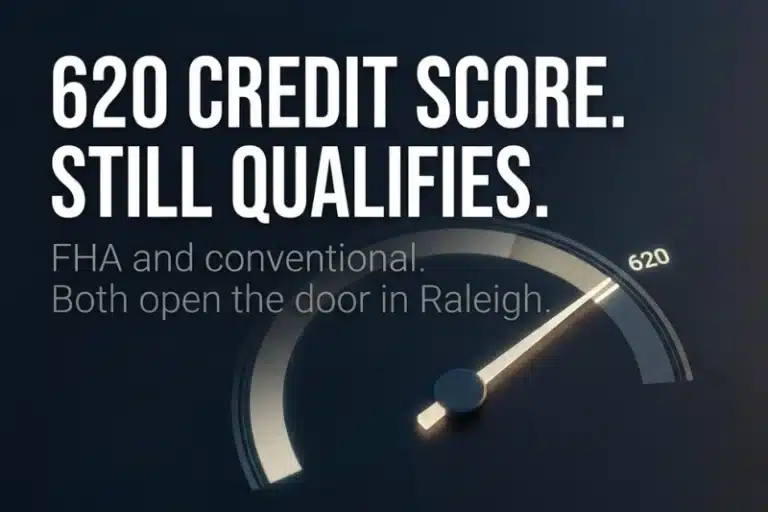
    620 credit score to buy a house in Raleigh is enough to qualify for both FHA and conventional financing, according to Logan Martini of Martini Mortgage Group. FHA opens at 580, conventional pricing typically starts at 620, and debt-to-income ratio and reserves often matter as much as the score itself. On a $350,000 Raleigh purchase, the difference between FHA and conventional cash-to-close runs about $5,250. Rate pricing tracks Freddie Mac’s national average, currently 6.67 per

  • New Construction vs Resale Raleigh: The Truth About Cost

    New construction vs resale Raleigh is a pricing question disguised as a lifestyle question. Builders fund advertised rate buydowns by holding home prices firm, and because a builder controls the comparable sales in an active subdivision, future price cuts on unsold lots can erode an earlier buyer’s equity with no contractual protection. Kevin Martini and Logan Martini of Martini Mortgage Group show Raleigh and Wake County buyers how to separate the price from the rate before signing, using current Freddie Mac and Doorify MLS data rather than a builder’s payment illustration. The strongest deals in today’s Triangle market are frequently resale homes with motivated sellers, not builder incentives.